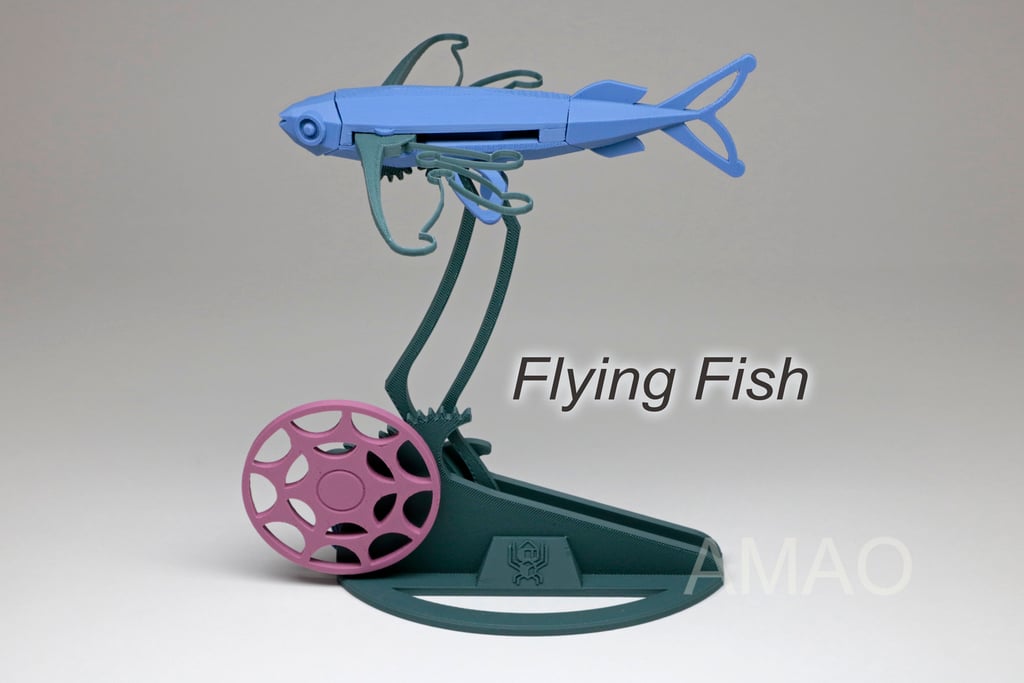
About this 3D model
Summary Flying Fish Flying fish live in the warm waters of the tropical and subtropical surface waters. They live in groups and have a habit of swim. They are mainly fed with zooplankton, but they are also an important food source for a large migratory fish. In the spring, with the Kuroshio northward, it is one of the important fish species in Taiwan's fisheries. It is also a species of the traditional cultural significance of the natives of Orchid Island in the southeastern Taiwan. Orchid Island is known as the "Hometown of Flying Fish". The island's indigenous Dao (Tao) has an inseparable relationship with the flying fish. When the black tide passes through Orchid Island, it brings the flying fish which is the beginning of the Orchid Island flying fish season. Flying fish is one of the traditional foods of the Dawu people. The Dawu people have strict traditional norms for catching the flying fish. During the season, Dawu men stopped capturing deep sea and the benthic fish, and only used manpower to draw a boat to catch them. From the perspective of modern marine conservation, in a such cultural traditions have the effect of restoring deep-sea benthic fish and coral reef fish. In recent years, with the effort to promote the flying fish season in various parts of Taiwan have resulted in excessive commercial fishing. What is worse, is that a large number of flying fish eggs are used for consumption and export. Flying fish eggs are exported to Japan in the name of "Marine Gold", and some are sold to the EU. The sales volume has reached 40 containers per year. However, this behavior severely broke the chance of flying fish, resulting in a decrease of number of flying fish. Under the temptation of commercial interests, people seen to ignore the importance of sustainable marine operations. The Dawu people have controlled over flying fish and marine resources, by not over-capturing, and integrate the concept of marine conservation into inheritance and life, ensuring that the future generations can continue to enjoy marine resources. May everyone learn from them. The way to the ocean. [Flying Fish] is the most difficult design after my [Pangolin]. In the works, I combine three elements, the flying fish that fly upwards, the tortoise of the Dawu people, the boat eye, and the pedestal with the wave rolling shape. In the process of designing creation, with all the shapes, mechanisms, material resilience, combination procedures, printing optimization, etc., must be carefully considered. Since every factor affects each other, all parts need to be coordinated. The flying fish can take off normally. Although the process takes a lot of effort, I enjoy this kind of creative fun. Thanks to SpiderMaker for sponsoring the creation of this work. Material used SpiderMaker PLA Matte Steel Blue/Matte Dark Slate Gray/Matte Orchid Purple/Matte Kraft Brown https://www.amazon.com/SPIDER-MAKER-Matte-Printer-Filament/dp/B07HX9DY9F Design Software SketchUp Print / UP BOX Print suggestions Layer height 0.2mm Do not reduce the print https://amaochan.work/work/ https://www.facebook.com/paperworkers/ [Flying Fish] Flying fish live in the warm surface waters of tropical and subtropical seas, forming schools and having migratory habits. They primarily feed on zooplankton, yet they are also an important food source for large migratory fish. In spring, as the Kuroshio Current moves northward, it becomes one of the important fish species in Taiwan's fisheries and is also a species of profound traditional cultural significance to the indigenous people of Orchid Island, located southeast of Taiwan Orchid Island is known as the "Hometown of Flying Fish". The island's indigenous Dawu (Tao) people have an inseparable relationship with flying fish. When the Kuroshio Current passes through Orchid Island, bringing migratory flying fish, it marks the beginning of the Orchid Island flying fish season. Flying fish is one of the traditional foods of the Dawu people. The Dawu people have strict traditional norms for catching flying fish. During the flying fish season, Dawu men cease catching deep-sea and benthic fish, and only use paddle canoes to go out to sea to catch flying fish. From the perspective of modern marine conservation, such cultural traditions have the effect of restoring deep-sea benthic fish and coral reef fish populations. In recent years, while various parts of Taiwan have made efforts to promote flying fish season activities, this has led to excessive commercial fishing. What's worse, large quantities of flying fish eggs are harvested for consumption and export. Flying fish eggs are largely exported to Japan under the name "Marine Gold", with some also sold to the EU. The export volume once reached 40 containers per year. This behavior severely hinders the flying fish's chances of reproduction, leading to a decrease in flying fish populations. Under the temptation of commercial interests, people seem to ignore the importance of sustainabl