About this 3D model
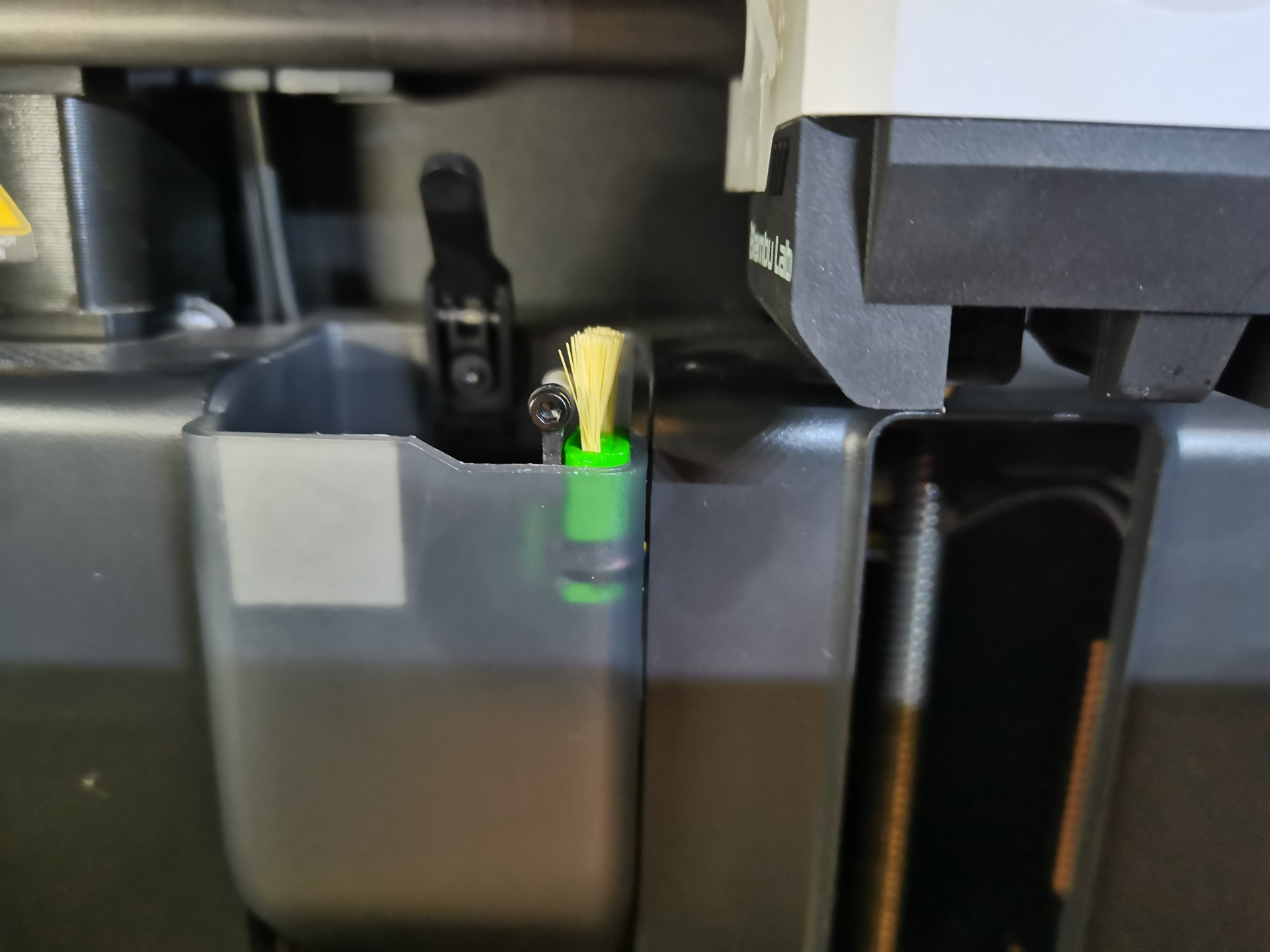
DIY Nozzle Brush Using a Painting Brush. During the use of Bambu P1S, it was found that sometimes the nozzle could not be cleaned, so this brush was made, and two versions were modified based on suggestions from netizens. I am using nylon bristles. The earliest version was made with copper wire, but later I found that nylon bristles can be used, and the usage experience is better than copper wire brushes. Nylon bristles are non-stick, have moderate hardness and will not scratch the nozzle. Heat resistance is also just right. Printing configuration: Layer heights of 0.12, 0.16, 0.20 are all possible, 5 walls, 50% or more infill (solid), no support or skirt needed. The first type of brush uses a flat-head nylon watercolor brush for painting. The advantage of this method is that it is easy to install and securely fixed (because the aluminum foil can be clamped more tightly). You only need to use pliers to cut off the head of the brush, and then cut the bristles according to the height of the nozzle. Buy a No. 7 or No. 8 flat-head painting brush with a bristle width of 1.0cm to 1.2cm. When cutting, leave 6mm of aluminum foil and try to use pliers to press the bristles tighter. This method is recommended as the installation is relatively simple. This method also eliminates the need to print bristle holders and wedges. The second type of brush is made from large nylon brushes purchased from Taobao and then cut into bristles. This method is much more troublesome and not as simple as the flat-head painting brush method, but the usage effect is similar. After printing, the installation steps are as follows: 1. Use a bristle holder to plant the bristles; 2. Use a wedge to press the bristles tightly. The bristles are on the side closer to the original nozzle wipe, and the wedge is on the outer side away from the nozzle wipe. This ensures that there is no gap between the bristles and the original nozzle wipe, preventing the wiped material from falling in; 3. Trim the bristles to the appropriate length, generally to the point where they can brush all the metal areas exposed on the nozzle silicone sleeve; 4. Push this nozzle brush forward from the back of the Bambu original nozzle wipe, and it will be locked. When disassembling, push the upper part of the brush backward, and it will fall off and be removed. It is recommended to use a flat-head painting brush for making. It is simple, convenient, and even more secure.